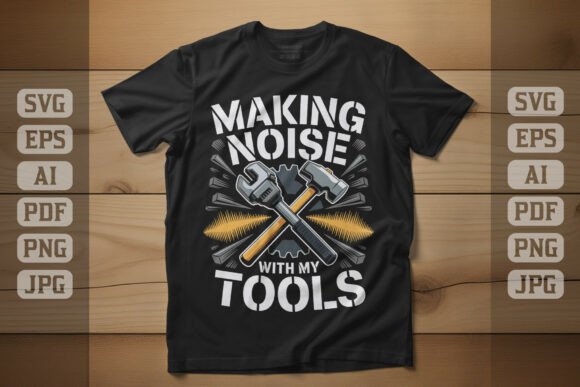
Making Noise with My Tools Design Review
As a designer who has spent years translating digital files into tangible thread, I approach every new asset with a critical eye. When I first opened the file for Making Noise with My Tools Design, I wasn't just looking at a graphic; I was visualizing how it would sit on fabric, how the thread would catch the light, and whether it would hold up under the scrutiny of a discerning customer. This piece is marketed as a premium mechanical typography artwork celebrating craftsmanship, but in the world of embroidery, "premium" means something very specific regarding stitch execution and structural integrity.
The First Impression: Typography Meets Texture
The immediate mood of Making Noise with My Tools Design is one of rugged reliability mixed with creative flair. The mechanical typography suggests strength, making it an ideal candidate for custom apparel targeting auto repair professionals or DIY enthusiasts. However, when moving from a screen to a hoop, the challenge lies in the density of the letterforms. In a standard T-Shirt Designs context, bold text often translates well to fill stitches, but intricate mechanical details can sometimes get lost if the stitch density isn't managed correctly.
Visually, the layout feels balanced, offering a strong focal point without overwhelming the garment. For an Etsy seller or small shop owner, this balance is crucial. It allows the design to breathe on a sweatshirt while remaining legible on a smaller embroidered patch. The personality of the design screams "hands-on," which aligns perfectly with the target demographic of mechanics and crafters who value their tools.
A Real-World Application: The Mechanic's Apron Project
To truly test the viability of this machine embroidery design, I imagined a specific scenario: creating a limited run of heavy-duty canvas aprons for a local garage workshop. The goal was to produce a personalized gift that felt professional yet personal. I visualized placing Making Noise with My Tools Design on the chest pocket area. On thick canvas, the texture adds depth to the fill stitch, making the mechanical elements pop. The quote serves as a conversation starter, instantly establishing a connection between the wearer and anyone who appreciates technical skill.
In this context, the design elevates a simple utility item into a boutique product. Customers aren't just buying an apron; they are buying an identity. If I were listing this as a finished product on my shop, the visual appeal of the stitching would be the primary driver of sales. The clarity of the typography ensures that even from a distance, the message lands, which is essential for brand recognition in a commercial setting.
Navigating Fabric and Hoop Challenges
While the design is robust, it is not immune to the physical limitations of embroidery. One area requiring careful attention is the use of textured fabrics. On a soft fleece sweatshirt, the nap of the fabric can interfere with fine details in the Graphics. If the mechanical lines are too thin, they might disappear into the pile of the material. Similarly, on stretchy fabrics like jersey knit, the tension of the running stitch could cause puckering if the correct stabilizer is not used.
For those considering using this design on caps or curved surfaces, the layout needs to be evaluated closely. Curved surfaces distort straight lines, and while the bold nature of Making Noise with My Tools Design helps, the corners of the letters might need slight adjustments during digitization to ensure they lie flat against the curve. Small hoop sizes also present a risk; shrinking the design too much can turn distinct mechanical shapes into muddy blobs of thread. Always check the minimum size recommendation before committing to a tiny baby embroidery project or a small hat badge.
Color Contrast and Thread Selection
The choice of thread colors will make or break this project. Since the design features mechanical themes, high contrast is key. Placing a dark grey version on a black t-shirt would be a mistake; the embroidery file relies on definition. I would recommend testing the design in black and white mockups first to ensure the hierarchy of the text remains clear. For holiday embroidery gifts, swapping the metallic accents for festive reds or greens could work, provided the contrast remains sharp against the background fabric.
Practical Notes for the Professional Designer
Before you commit this digital embroidery file to a client order or your own inventory, there are several practical steps to take. First, always test the design on scrap fabric that matches the weight and texture of your final product. This allows you to inspect small details and adjust the hoop size if necessary. Look specifically at the junction points where the typography meets any graphical elements; these are common failure points for loose threads.
If you are planning to sell items featuring Making Noise with My Tools Design, confirm the licensing terms immediately. As a craft business owner, protecting your investment is vital. Ensure you have the right to use the design for commercial embroidery projects, whether that means selling the physical finished product or offering the file itself. Additionally, consider how the design fits into your overall brand consistency. Does the rugged aesthetic match your other offerings? If you are known for delicate floral applique designs, this mechanical theme might feel out of place unless carefully curated.
Maximizing Value and Customer Trust
Ultimately, the value of Making Noise with My Tools Design lies in its ability to communicate quality. A well-executed embroidery project signals professionalism and care. When a customer receives a tote bag design or a personalized shirt with crisp, clean stitching, their trust in your brand increases. They see the effort put into selecting the right stabilizer, the precision of the satin stitch borders, and the thoughtful color choices.
For the handmade shop owner, this design offers a versatile asset that can be adapted across various product lines. From kitchen towels to nursery decor (perhaps for a future mechanic), the adaptability is strong. However, success depends on execution. Do not rush the process. Take the time to review the stitch count and density, ensuring that the final result honors the craftsmanship the design claims to celebrate. By treating Making Noise with My Tools Design with the respect it deserves, you create more than just a printed image; you create a lasting piece of wearable art that stands the test of time and frequent washing.