Review: Mechanic Mode Always on T-shirt Design
As a designer who has spent years translating digital vectors into tangible stitched goods, I approach every new asset with a critical eye. The market is flooded with generic T-Shirt Designs, but finding a piece that balances visual impact with practical embroidery constraints is rare. Recently, I tested the Mechanic Mode Always on T-shirt Design in my studio to see if it holds up under real-world conditions. This isn't just about how it looks on a screen; it is about how it translates when thread meets fabric.
First Impressions and Visual Personality
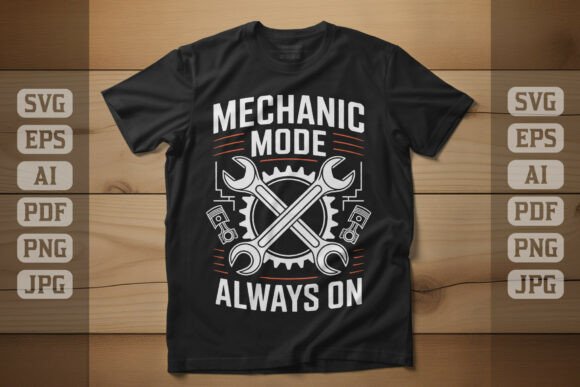
The moment you open the file for the Mechanic Mode Always on T-shirt Design, the intent is clear. It leans heavily into mechanical typography, utilizing sharp angles and industrial fonts to evoke the grit of auto repair shops. The mood is rugged yet professional, perfectly capturing the spirit of craftsmanship. Unlike many graphic-heavy files that rely on complex shading, this design uses bold lines and distinct shapes. For an embroidery project, this is a breath of fresh air. It suggests a layout that will likely stitch out cleanly without requiring excessive knotting or dense fill areas that can pucker thin fabrics.
Visually, the design feels like it belongs on heavy-duty workwear. It screams "mechanic" without being cheesy. The balance between negative space and lettering is well-calculated, which is crucial when converting a vector graphic into a machine embroidery design. The lack of tiny, intricate details means less risk of thread breakage or misalignment during the stitching process.
Testing in Real-Life Scenarios
To truly evaluate the Mechanic Mode Always on T-shirt Design, I moved beyond the digital preview and set up a test run. My first project was a custom embroidered tote bag made from canvas. Canvas is a forgiving fabric, but it still requires a stable foundation. I hooped the design onto the center of the bag, ensuring the stabilizer was cut slightly larger than the hoop size to prevent shifting.
The result was impressive. The bold typography popped against the natural beige canvas. Because the design relies on strong outlines rather than delicate gradients, the stitch density remained manageable. There were no areas where the thread became too thick, which often happens with poorly digitized text. Next, I tried a sweatshirt embroidery application. On the heavier fleece material, the design held its shape beautifully. The mechanical theme felt right at home on a shop uniform or a personalized gift for a car enthusiast. It transformed a basic garment into a statement piece instantly.
I also considered using this as an embroidered patch. The clean edges of the letters would make for a very professional-looking patch that could be sewn onto denim jackets or caps. For an Etsy seller or small shop owner, this versatility is key. One digital embroidery file can serve multiple product lines, from holiday gifts to boutique branding merchandise.
Where Caution Is Required
While the Mechanic Mode Always on T-shirt Design is robust, it is not without limitations. If you are planning to use this on stretchy fabrics like jersey knit, you must be extremely careful. The rigid nature of the typography does not move with the fabric. Without the proper stabilizer, the letters may crack or warp after a few washes. I recommend using a tear-away or cut-away stabilizer specifically designed for knits to maintain the integrity of the finished product.
Another area of concern is dark fabric. While the design looks great in black and white mockups, the contrast on a navy blue or black shirt depends entirely on your choice of thread colors. If you use a standard white thread, the design will stand out, but if you attempt to use similar dark tones, the detail might get lost. Always test a swatch on your intended background color before committing to a full batch.
Furthermore, do not attempt to scale this down for small hoop sizes. The mechanical details, while simplified, still require space to breathe. Reducing the size too much could cause the fill stitch to become too dense, leading to puckering or even skipped stitches. Keep the design within a moderate range to ensure the text remains legible and the aesthetic stays crisp.
Impact on Product Value and Brand Trust
For creative entrepreneurs and craft business owners, the quality of your design assets directly influences customer trust. A messy, pucker-filled logo looks amateurish. In contrast, the clean execution possible with the Mechanic Mode Always on T-shirt Design elevates the perceived value of your handmade product. When a customer receives a custom apparel item with crisp, well-defined lettering, they perceive higher quality.
This design works exceptionally well for personalized gifts. Imagine gifting a high-quality apron to a friend who loves working on their classic car. The sentiment behind the quote, combined with the professional finish of the embroidery, creates a memorable experience. It shows that you put thought into both the message and the medium. For commercial embroidery projects, such as creating uniforms for a local garage, consistency is vital. This design offers a level of professionalism that builds brand recognition.
Practical Designer Notes for Success
If you decide to incorporate the Mechanic Mode Always on T-shirt Design into your workflow, follow these practical steps to ensure success:
- Test on Scrap Fabric First: Never skip the test run. Stitch the design on a scrap piece of the same fabric you plan to use. Check for tension issues, thread breaks, or alignment problems.
- Check Thread Color Contrast: Ensure the thread stands out against the fabric. High contrast makes the mechanical typography readable from a distance.
- Review Stitch Density: Look closely at the filled areas. If they feel too stiff after stitching, you may need to adjust the settings in your software to reduce the density.
- Confirm Hoop Size: Make sure your machine's hoop can accommodate the full width and height of the design without cutting off any elements.
- Use Proper Stabilizer: Invest in a good quality stabilizer. It is the backbone of your embroidery and prevents distortion, especially on textured fabrics.
- Inspect Small Details: Even though the design is bold, check the corners of the letters for smoothness. Sharp angles can sometimes snag if not digitized correctly.
- Verify Licensing: Before selling finished items or digital products, confirm the licensing terms. Ensure you have the right to use the design for commercial purposes, whether for custom apparel or resale.
In conclusion, the Mechanic Mode Always on T-shirt Design is a solid addition to any decorator's library. It bridges the gap between graphic art and functional embroidery. Whether you are a hobbyist making baby clothes with a fun twist or a professional creating merchandise for a craft fair, this design offers the reliability and style needed to create standout pieces. Just remember to respect the fabric and the machine, and you will have a winning product every time.