Psycho Magnet: A Designer's Review for Real Projects
As a designer who has spent years navigating the fine line between digital art and tangible textile work, I approach every new asset with a critical eye. When Psycho Magnet landed on my desk as an SVG cutting file, my immediate reaction was one of amusement followed by practical curiosity. The description promises a design that is "funny super easy to cut and weed," specifically tailored for DIY projects using Cricut or Silhouette Cameo machines. However, my world revolves around thread, tension, and fabric interaction. So, before I recommend this graphic for your next commercial run or Etsy listing, let’s dig into how Psycho Magnet translates from a digital vector into a high-quality finished product.
First Impressions: Visual Weight and Mood
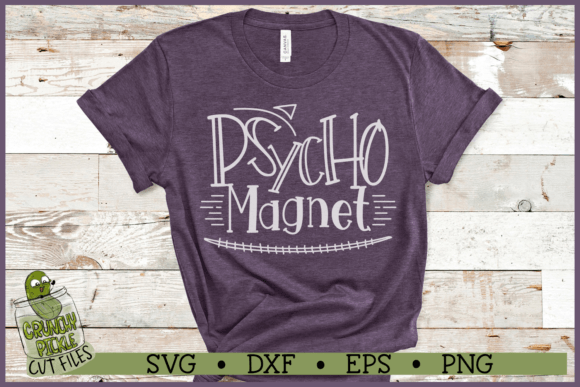
The concept behind Psycho Magnet is inherently playful. It taps into that quirky, slightly rebellious humor that resonates deeply with modern craft consumers. Visually, the layout appears clean and bold, which is essential when considering it as a potential machine embroidery design. Even though this specific asset is marketed as a cutting file, the principles of good design remain consistent across mediums. The shapes are distinct, avoiding the microscopic details that often cause headaches in both weeding vinyl and executing intricate satin stitches.
In the realm of Graphics, simplicity often wins. This design avoids cluttered lines, suggesting that if you were to adapt it for an embroidery project, it would likely hold up well against various stitch types. The mood is lighthearted yet punchy, making it an ideal candidate for custom apparel where the message needs to be read instantly. Whether you are creating a personalized gift for a friend who loves oddball humor or stocking a small shop with unique merchandise, the visual personality of Psycho Magnet feels ready for prime time.
From Vinyl to Thread: Adapting for Embroidery
While the product is explicitly an SVG cutting file, many of us in the crafting community repurpose these clean vectors into digitized embroidery files. If you are planning to turn Psycho Magnet into a custom apparel piece using thread rather than heat transfer vinyl, there are specific considerations to keep in mind. The bold outlines suggest it could work beautifully as an applique design or a dense fill stitch pattern.
Imagine placing this design on a heavy cotton sweatshirt. The contrast between the dark thread and the heather grey fabric would make the graphic pop. Because the design is described as "super easy," the likelihood of complex underlays or excessive jump stitches is low, which is a huge plus for efficiency. For an Etsy seller looking to streamline their production process, a design that doesn't require constant machine intervention is gold. You can imagine running a batch of sweatshirt embroidery orders where Psycho Magnet serves as the focal point, maintaining consistency across every item.
Real-World Application: The Tote Bag Scenario
Let’s walk through a real-life scenario. You have a client requesting a set of branded tote bags for a local boutique event. They want something memorable but not overly corporate. Psycho Magnet fits this brief perfectly. On a canvas tote bag design, the sturdy fabric provides a stable base, reducing the risk of puckering even with moderate stitch density.
If you were to embroider this, you might opt for a combination of running stitch for the outline and a tight fill stitch for the interior shapes. The result would be a durable, professional-looking handmade product that withstands daily use. Customers buying these bags would appreciate the tactile quality of the stitching compared to a flat vinyl print. The durability adds perceived value, justifying a higher price point for your small shop product. Furthermore, because the design is funny and relatable, it encourages social sharing, acting as free marketing for your brand whenever someone carries the bag in public.
Navigating Fabric Challenges
However, not all surfaces are created equal. While Psycho Magnet looks great on standard cotton, you must exercise caution with textured fabrics like fleece or knits. The "easy" nature of the design helps, but stretchy materials can distort the final image if the proper stabilizer isn't used. For baby embroidery items or delicate nursery decor, ensure the thread colors are soft and the backing is tear-away to maintain comfort against sensitive skin.
Dark fabrics present another variable. If you are working with black denim or navy wool, you will need to carefully select thread colors that offer high contrast. White or neon threads usually work best here, but always test a swatch first. Additionally, curved surfaces like caps require precise digitization to prevent the design from warping. Since Psycho Magnet is originally a 2D vector, adapting it for a 3D surface like a baseball cap demands extra attention to detail during the digitizing phase.
Strategic Considerations for Business Owners
For those running a craft business, the versatility of this graphic is its greatest asset. It can serve as a standalone statement on a t-shirt, a subtle accent on a pillow cover, or the centerpiece of a holiday gift. The key is understanding how Psycho Magnet affects your brand perception. A well-executed embroidery job signals professionalism and care, building customer trust.
When preparing printable mockups for your online store, visualize the design in different contexts. Does it look balanced on a mug? Is it too large for a tea towel? Testing these scenarios digitally before committing to physical production saves time and materials. Also, remember to check the licensing terms. Even if the SVG file is purchased, selling finished goods made from it may have specific restrictions. Always confirm whether you can sell the finished product or if the license is limited to personal use.
Practical Designer Notes for Success
To ensure your project with Psycho Magnet turns out flawlessly, follow these practical steps:
- Test on Scrap Fabric: Never skip the test run. Stitch the design on a scrap piece of the same fabric you plan to use to check for puckering or skipped stitches.
- Check Thread Contrast: Ensure the thread colors stand out against the background. Low contrast can make the design disappear, ruining the impact.
- Review Stitch Density: If converting to an embroidery file, avoid over-densifying the fill areas, which can stiffen the fabric unnecessarily.
- Confirm Hoop Size: Verify that the design fits comfortably within your machine's hoop size without needing awkward repositioning.
- Inspect Small Details: Zoom in on the corners and curves. Even simple designs can have sharp angles that are difficult for needles to navigate smoothly.
- Use Proper Stabilizer: Especially for commercial embroidery, invest in high-quality stabilizers to support the weight of the thread and maintain shape.
- Compare Backgrounds: Test the design on both light and dark fabric backgrounds to see how the color palette shifts.
- Verify Licensing: Double-check the usage rights for digital product sellers to ensure you are compliant when selling finished items.
Final Thoughts on Psycho Magnet
In conclusion, Psycho Magnet offers more than just a funny graphic; it provides a solid foundation for creative expression in the world of Crafts. Its clean lines and straightforward layout make it an excellent choice for both hobbyists and professionals. Whether you are cutting vinyl for a quick DIY project or digitizing it for a premium embroidered patch, the design holds its own. By paying attention to fabric choice, stabilization, and color contrast, you can transform this digital asset into a high-quality finished product that delights customers and strengthens your brand. As always, trust your instincts, test thoroughly, and let the design speak for itself.